
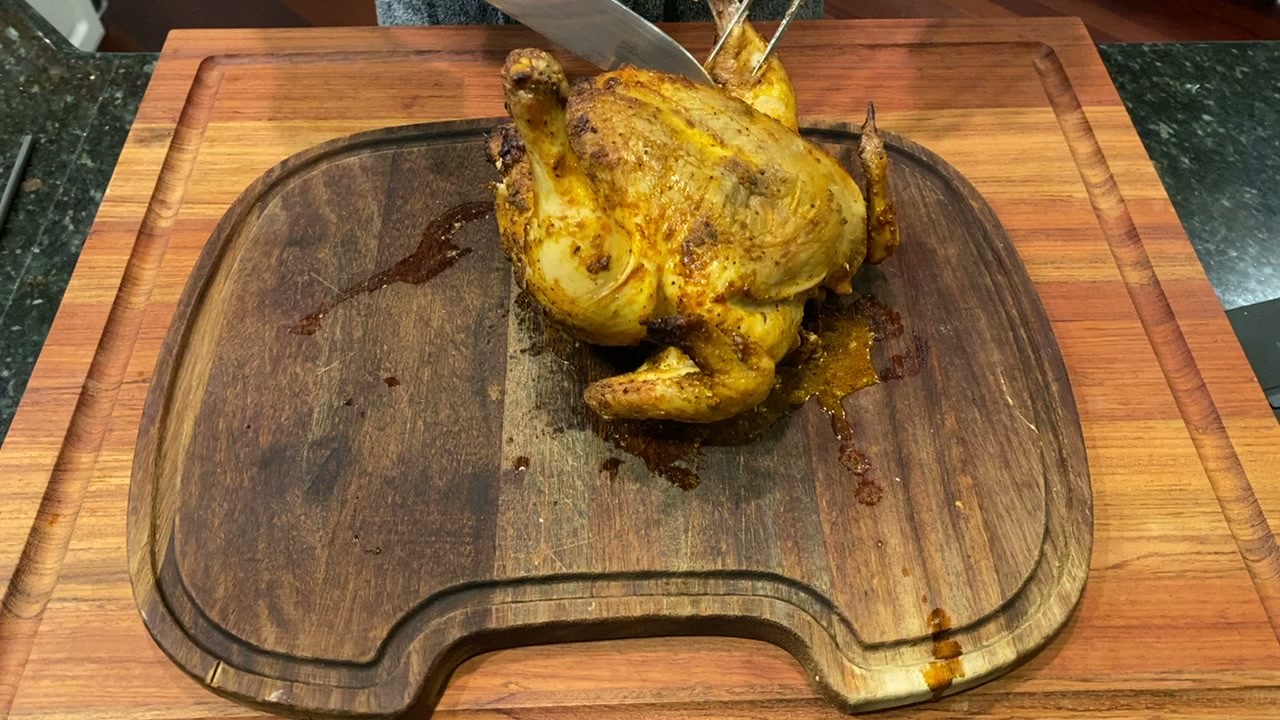
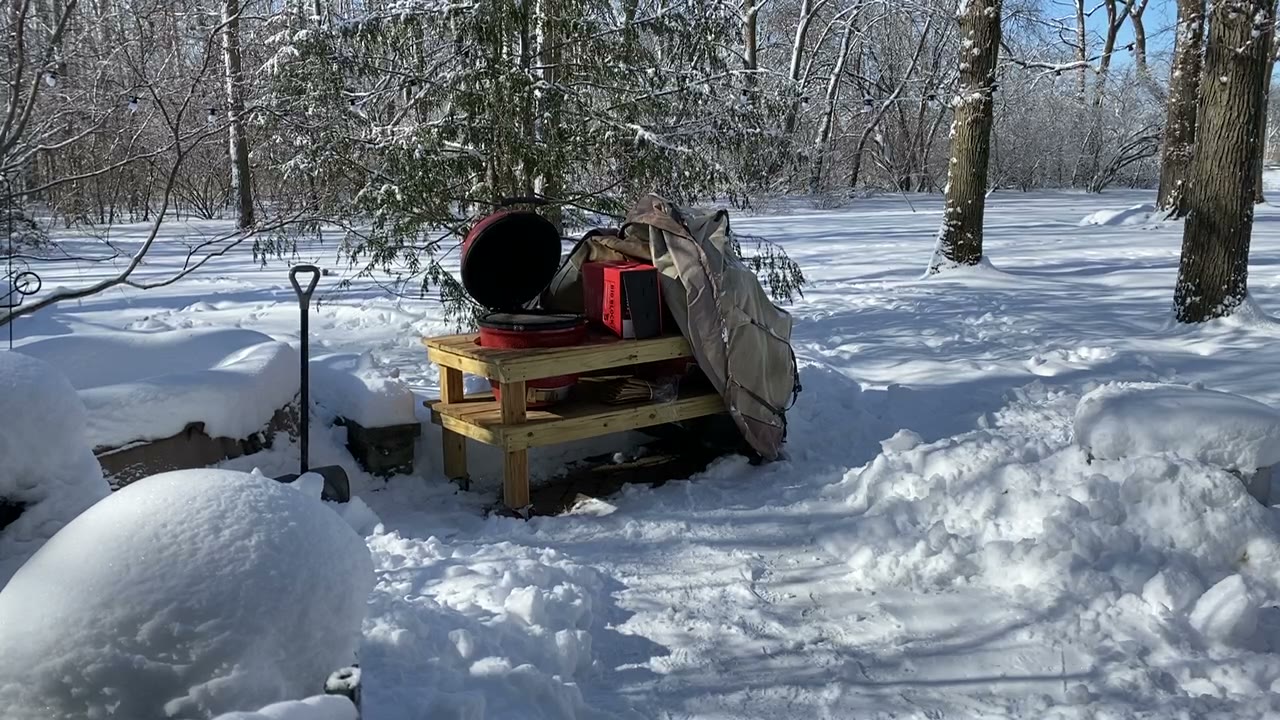
This one dates from February 2021, and I’m only writing it up now. At that time, we were still in Naperville IL, and in the middle of another winter. A week or so before, the Kamado Joe Classic had been a snow-dome in the back garden. I’d dug it out and got it back in service, and by the following Saturday it was cooking Peruvian Pollo a la Brasa. Or pseudo-Peruvian, anyway: Raichlen’s website version of the recipe is called “Peruvian-Style Spit-Roasted Chicken”, and mine was a whole chicken standing upright in a Kamado courtesy of a gadget that was and is still a key part of my outdoor kitchen.
Raichlen’s version
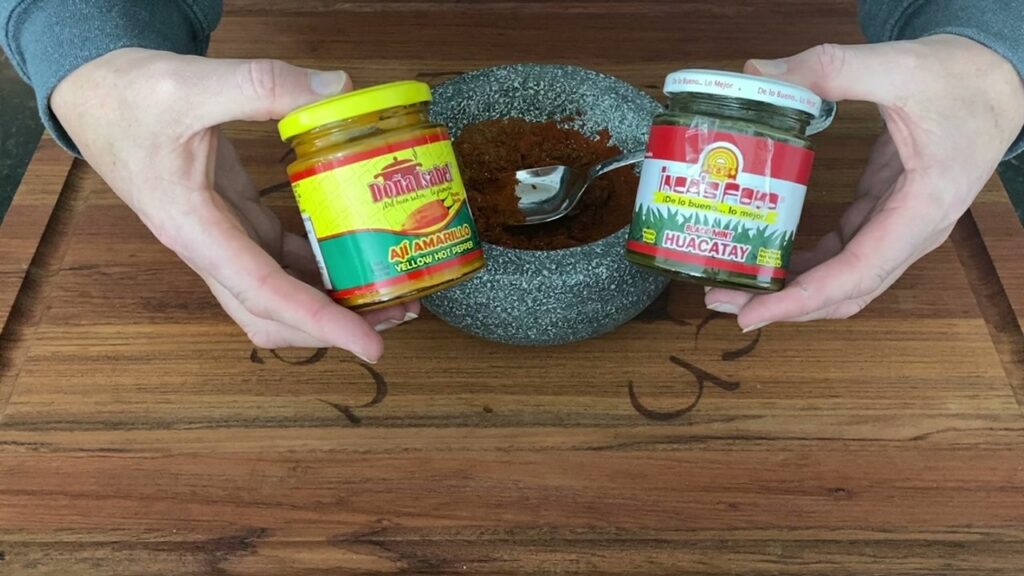
The recipe is Steven Raichlen’s “Peruvian Grilled Chicken with Creamy Salsa Verde” from his book Project Fire (pages 201–203), and the sauce, he says, comes courtesy of his assistant Nancy Loseke. The rub is garlic and salt pounded to a paste, smoked paprika, cumin, black pepper, ají amarillo (the yellow Peruvian chile) and huacatay (Peruvian black mint), with lime juice and olive oil. Marinate for 3 to 5 hours. I’ve left the quantities out; (a) they belong to the book, so go and buy Project Fire, and (b) this is a “mix up and adapt to taste” approach : when you see the ingredients these are powerful flavours but simple to amend as you go.
So this was the first time I’d heard of these Peruvian pastes but they’re a great larder addition and are essential to this dish. In the USA, these are readily available in the specialist grocery stores (The Fresh Market etc) and worst case, are on a 48 hour delivery timeline from Amazon. In the UK, it feels like you have to get these directly FROM the Amazon – they are that rare….especially the Huacatay. I actually looked into growing my own Huacatay when I went back to the UK. It’s possible, I think, but in the end I just brought some back on my next American trip… (FYI, by the way, I think the official “substitute” in the UK is somewhere in the middle of mint, cilantro, oregano, cumin, Thai basil and lime !)
The chicken
Raichlen spatchcocks the bird and grills it indirectly for about 40 minutes. I did the indirect part but “straight up” I didn’t feel the need to do the spatchcock.
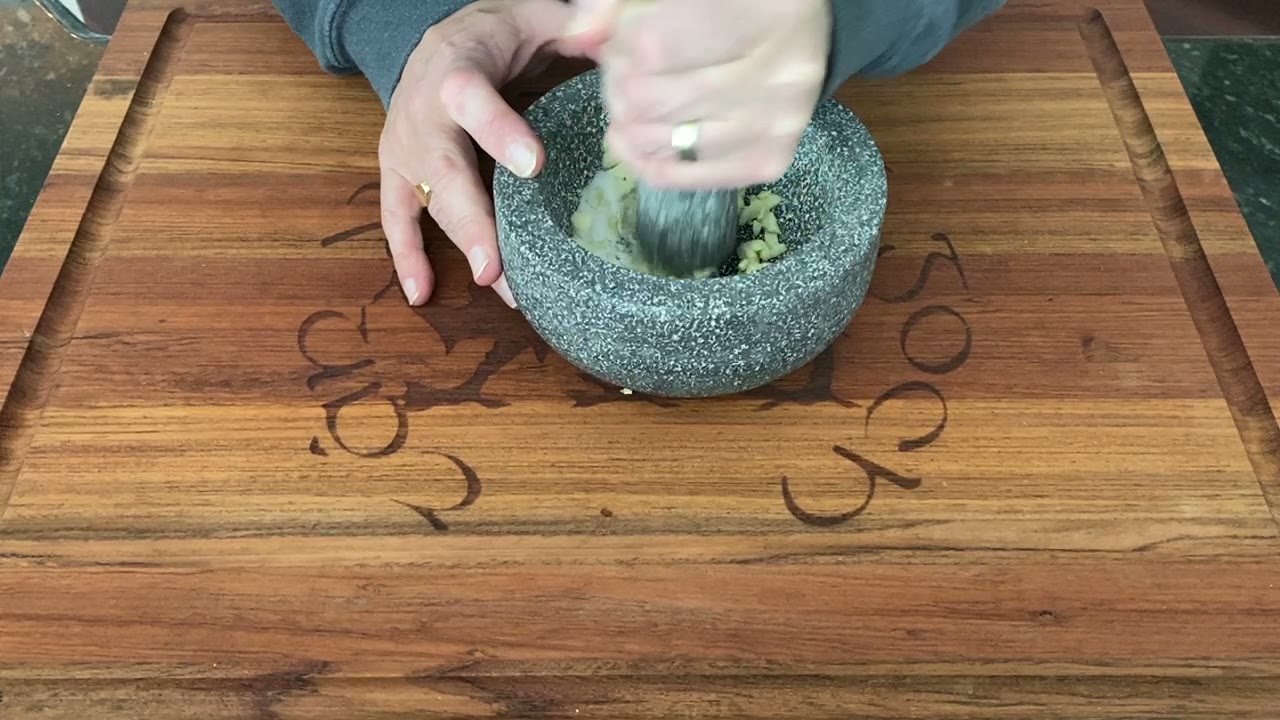
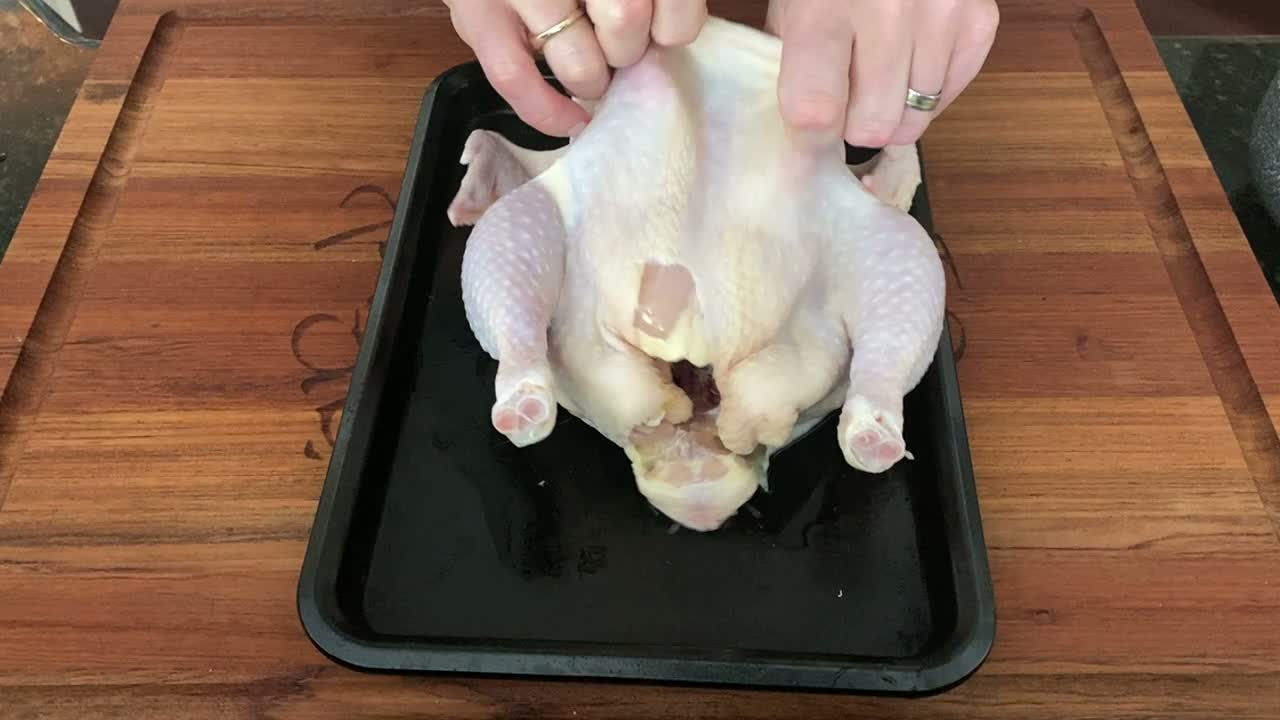
Garlic first, chopped and then pounded in the granite mortar, with the spices and the ají amarillo paste worked in until it was a thick red-brown paste. Then the bird: skin lifted and some of the paste worked in underneath (Raichlen’s “if you’re feeling ambitious” step), and into a bag to marinate for roughly three hours, which puts it at the bottom edge of his range.
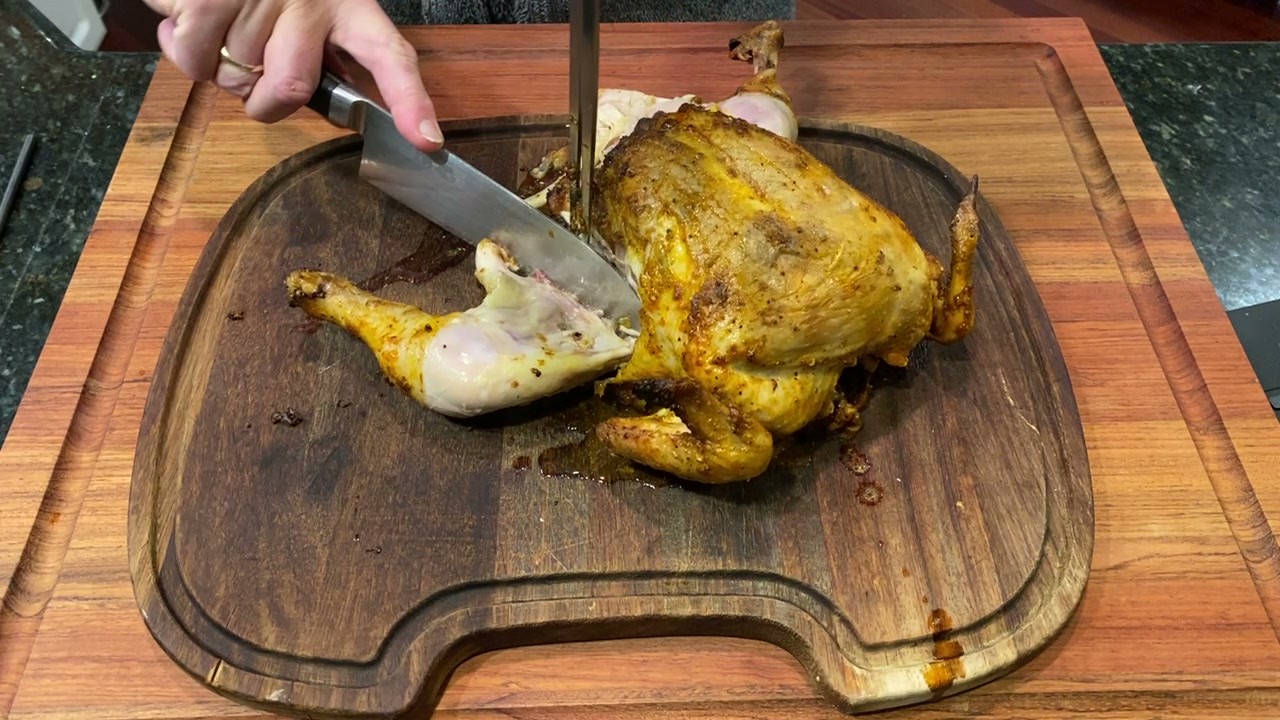
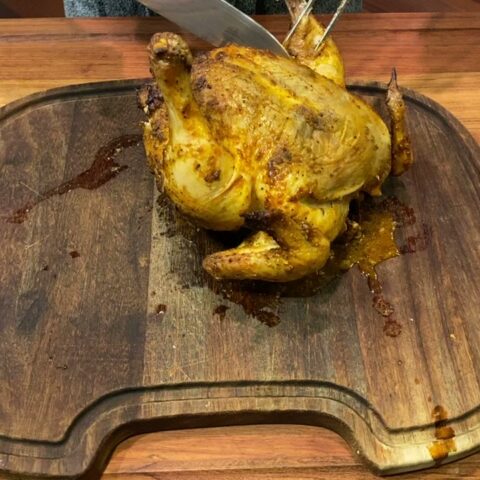
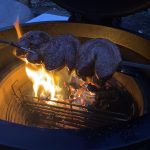
A whole chicken, not a spatchcock, went up on the Trompo King (Smokeware’s upright skewer, which I wrote about here, and first used on the Trompoori Jarbecue chicken) and into the Classic: indirect, charcoal, somewhere around 350–400°F as I remember it, and I don’t think I added any smoking wood.
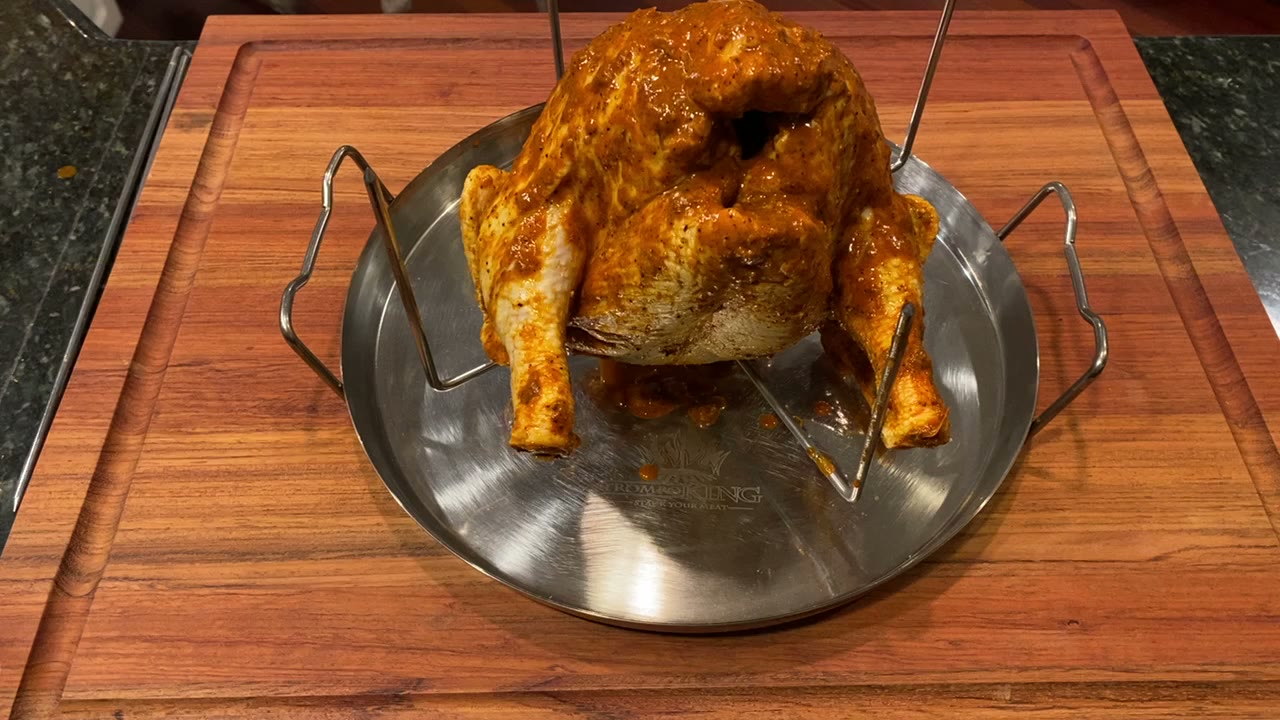
I cooked it to temperature rather than time. Raichlen’s 40 minutes is for a flattened bird, and a whole one standing up is a different job, so two MEATER probes went in and told me when it was done.
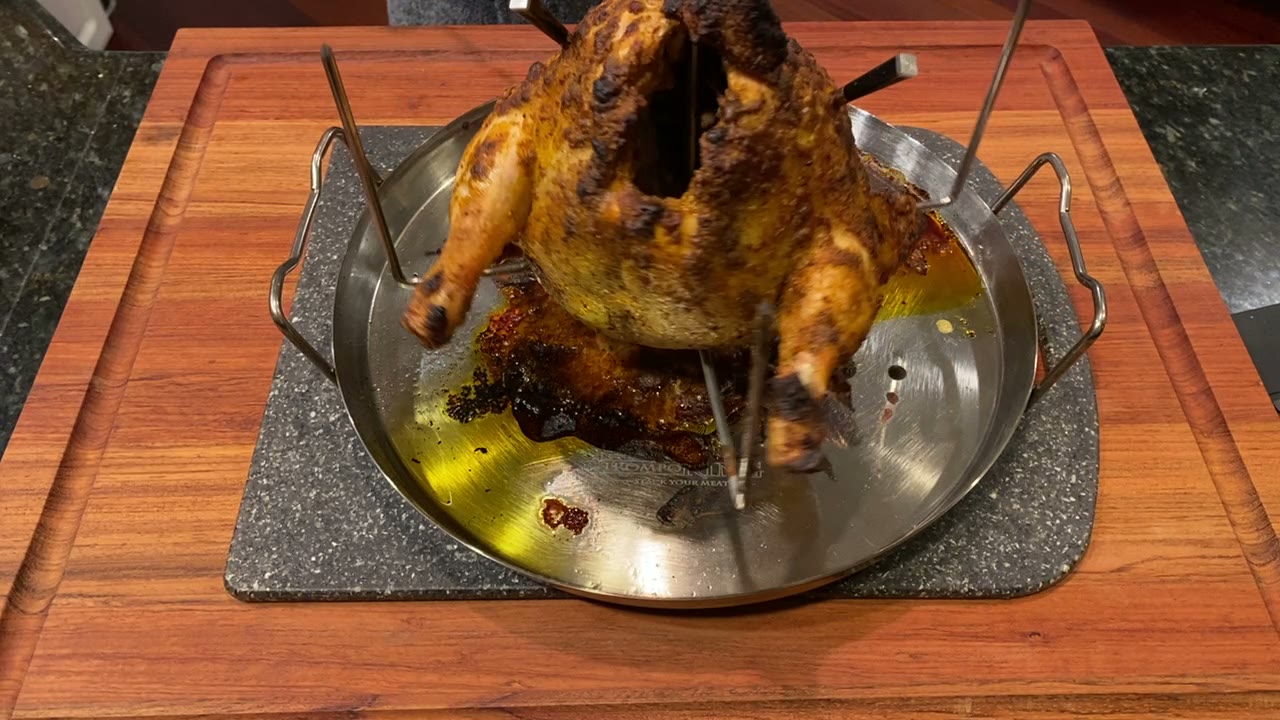
It came out dark in places. Raichlen’s own photograph has the same blackened patches so I wasn’t too concerned, and of course the smell of a not so conventionally spiced roasting chicken off the Kamado in the snow had neighbours again wondering what on Earth the Brit was up to.
The green sauce
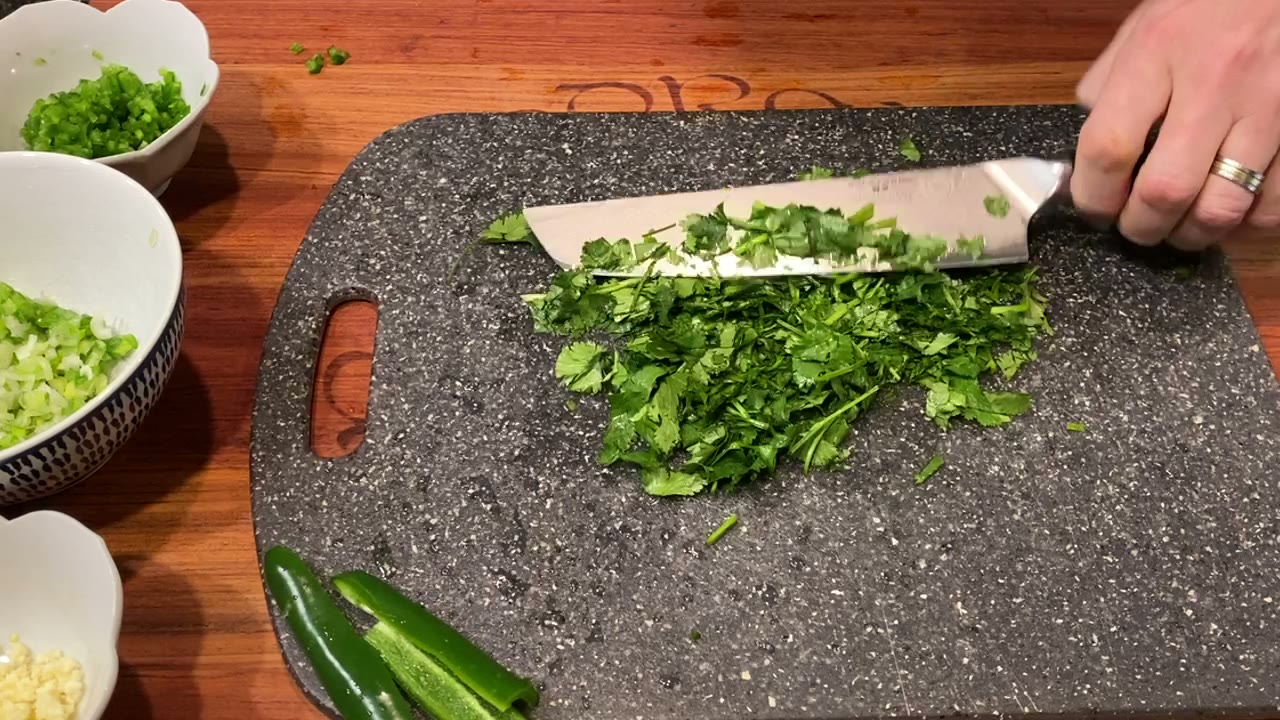
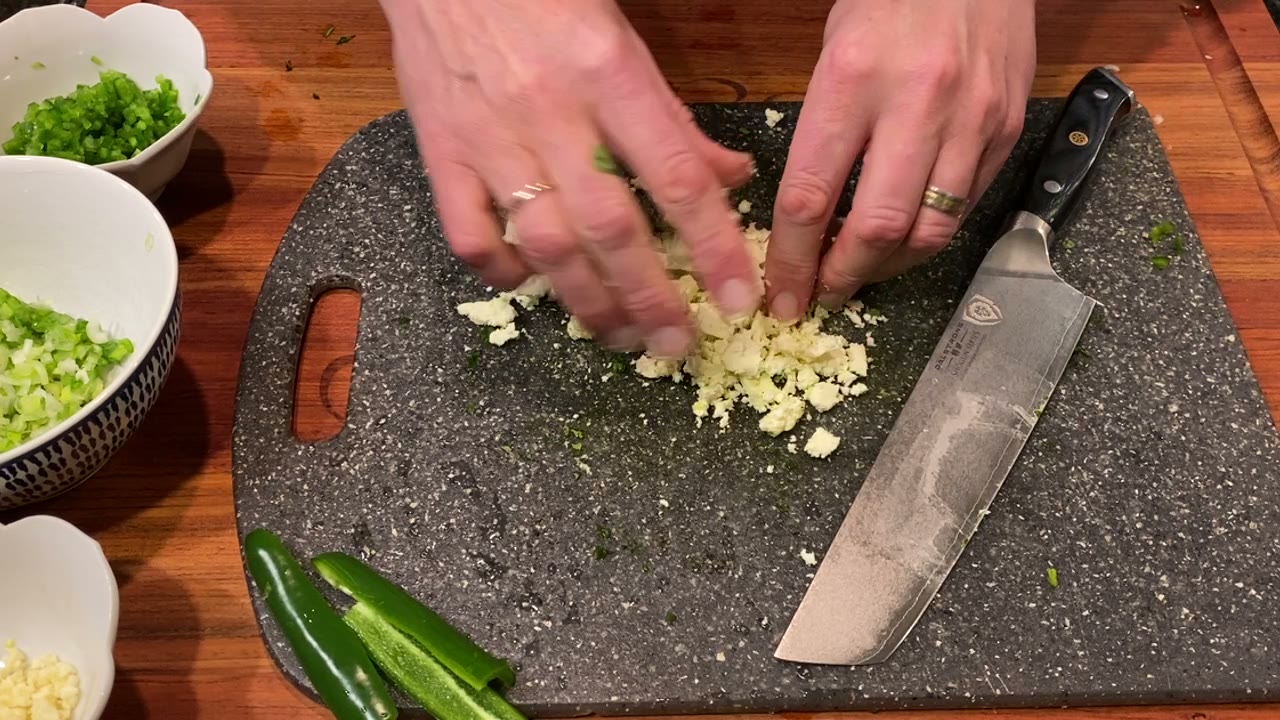
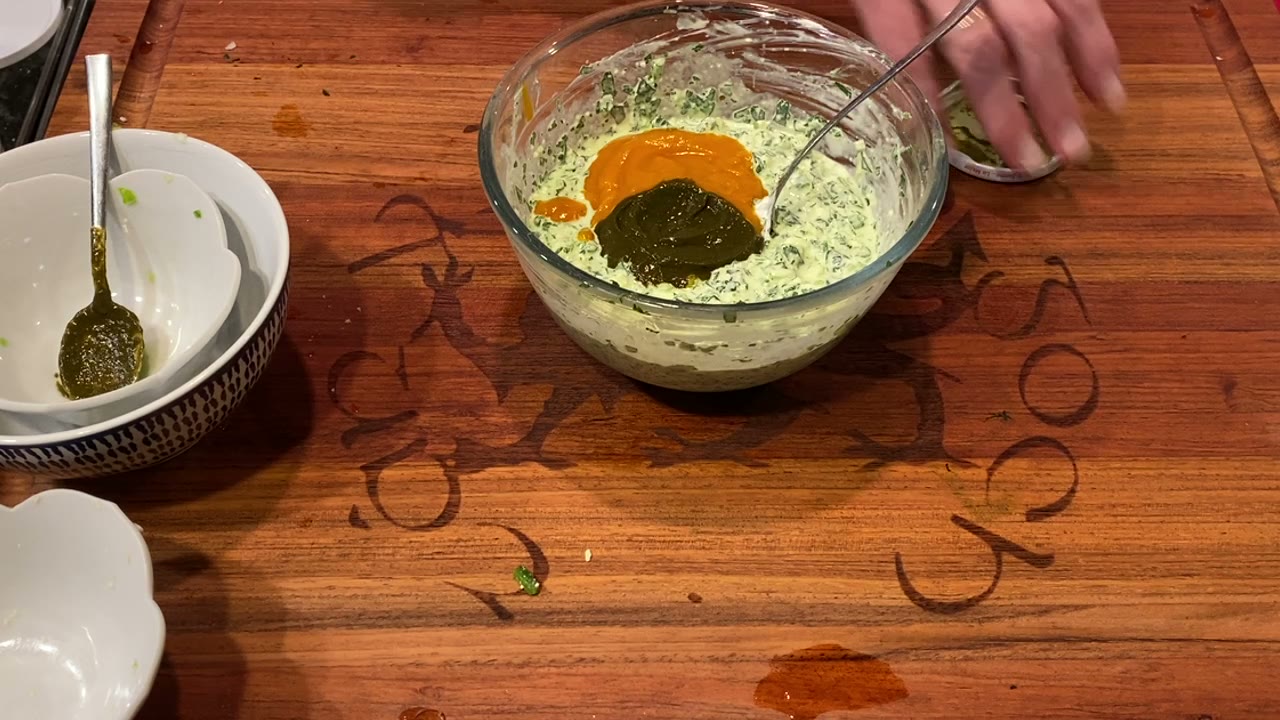
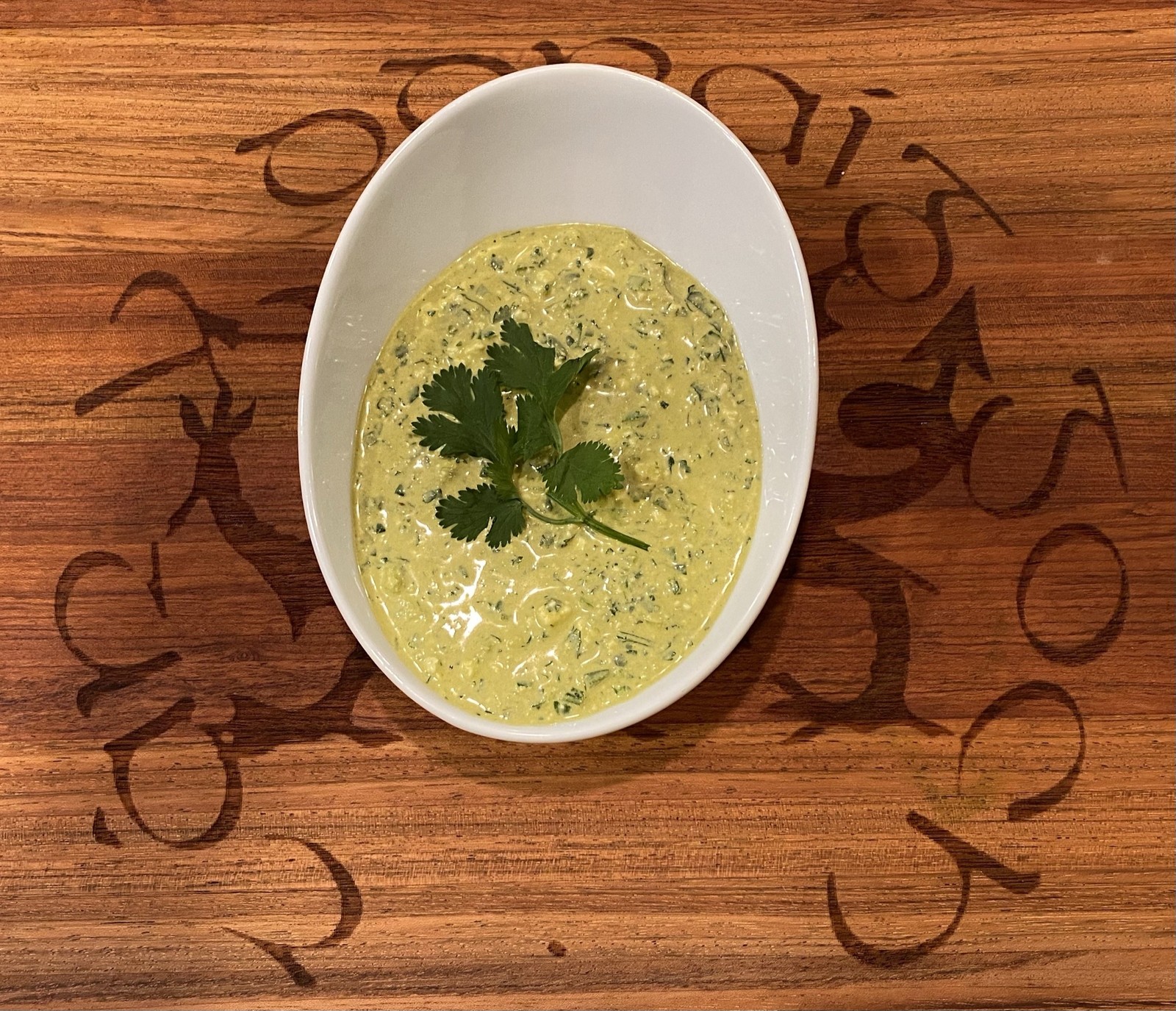
Raichlen’s Creamy Salsa Verde is cilantro (coriander leaves !), jalapeño, scallion (spring onions !), garlic, ají amarillo, huacatay, lime and mayonnaise, and mine started there. A fair amount of the chopping made it to camera. I blended it afterwards as this really does call for a smooth, creamy, cold sauce.
Two things went into the bowl that aren’t in the book. One is queso fresco, crumbled in by hand. It’s a mild, Mexican white cheese, and I felt we needed texture. It’s in no way cheesy, and there are lots of substitutes from all parts of the world. That one was mine and is another reason this is “pseudo”. The other addition was sour cream, which comes from the website version of Raichlen’s sauce. This mixture of sour cream and mayonnaise has survived the years of me making this. Don’t know what made me think a blend would be better – it certainly wasn’t guilt over using cream/fat based ingredients ! But I may have to go back to a “pure mayo” experiment one day.
On the plate
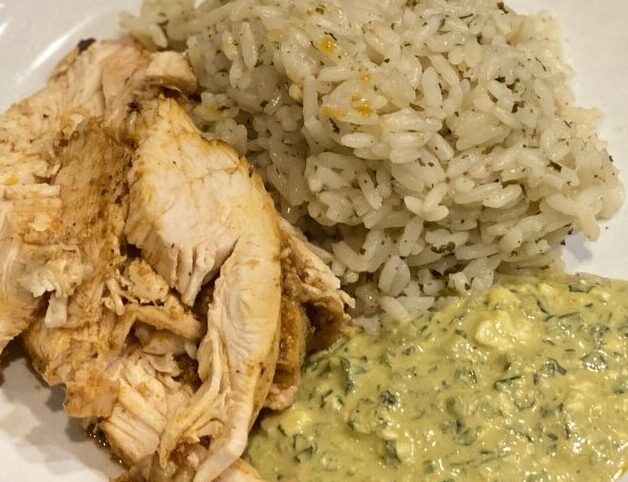
Carved, pulled, rice, and the sauce spooned alongside.
(Rice isn’t trying to complicate the dish. It’s rice. Spiced up a little with cilantro (coriander) and lime, but simple as that. Just for the record.)
Subsequent cooks have deviated further from the original. It’s fun to do spatchcocked whole chicken, or vertically spiked ones, but the go-to nowadays is a combo of past and subsequent techniques. A mound of chicken thighs (for the fat and flavor) with chicken breast, also marinated per whole bird. More on that in another post…
Anyway, here’s the whole cook in about ninety seconds:
Epilogue : Five years on
Gosh, time flies ! Like I said, I’ve cooked this chicken many times since. It joined the repertoire, alongside plenty of other chickens, and my rubs have multiplied since.
The sauce has stayed put. Queso fresco is still in it, whenever I can get hold of it. When we lived in the UK, family demand for the recipe did not wane, but the Queso was hard to find, so I swapped it for Indian paneer and made sure to rinse it to take the saltiness down. Five years on there’s very little I’d change about it and back in the USA, we’re back to the Mexican cheese.
I dont want to take away from the chicken and its marinade or technique, but the Green Sauce ?? That’s where the WOW is every time.
Pollo a la Brasa — Straight Up
Equipment
- Kamado Joe Classic
- Trompo King upright skewer
- MEATER probes
- Granite mortar and pestle
- Blender
Ingredients
The chicken
- 1 whole chicken about 3½–4 lb in Raichlen’s recipe
The rub (pound the garlic and salt to a paste first)
- garlic cloves
- coarse salt
- smoked paprika
- ground cumin
- black pepper
- ají amarillo paste the yellow Peruvian chile
- huacatay paste Peruvian black mint (fresh mint in a pinch)
- lime juice
- olive oil
The green sauce
- cilantro (coriander leaves)
- jalapeños
- scallions (spring onions)
- garlic
- ají amarillo paste
- huacatay paste
- lime juice
- mayonnaise
- sour cream my blend of mayo and sour cream has stuck
- queso fresco crumbled by hand, for texture; rinsed paneer works where you can’t find it
- salt and pepper to taste
Instructions
- Pound the garlic and salt to a paste in a mortar, then work in the spices, ají amarillo and huacatay pastes, lime juice and olive oil.
- Lift the skin over the breast and thighs and work some of the paste underneath. Coat the rest of the bird, bag it, and marinate in the fridge for roughly three hours (Raichlen says 3 to 5).
- Set up the Kamado for indirect cooking with charcoal, roughly 350–400°F.
- Stand the chicken upright on the Trompo King and roast it indirect, with a probe in each side. Cook to temperature, not time (Raichlen’s target is 165°F in the thigh).
- Meanwhile make the sauce: chop the cilantro, jalapeños, scallions and garlic, then blend with the pastes, lime, mayonnaise and sour cream until smooth, creamy and cold. Crumble in the queso fresco and season.
- Rest, carve and pull the chicken. Serve with rice (cilantro and lime) and plenty of the green sauce.

0 comments on “Pollo a la Brasa — “Straight Up””Add yours →