

What’s Welsh ?
Firstly, it’s important for a Welshman such as I to point out certain facts like “Welsh is the only legally recognised language in the UK”. English is only “official” because it happens to be a practical reality – everyone speaks it…it’s not actually enshrined in law.
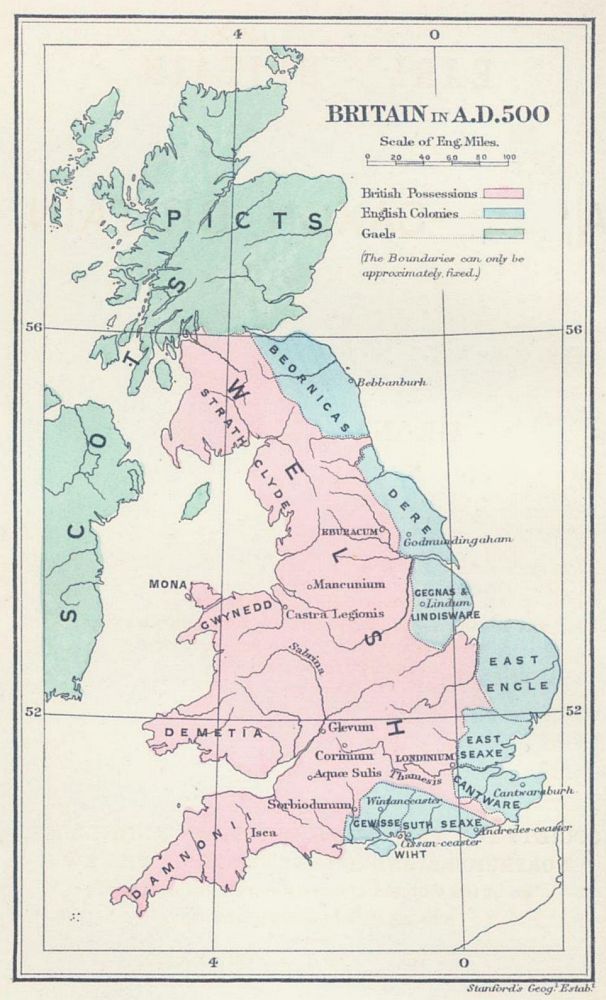
It’s also an old language…a very old language – the language of the Ancient Britons, in fact. European Celts first moved to Britain in 700BC (although I read that there were more primitive groups around before then), so Welsh roots go back some 2700 years at least. These were the folks who inhabited the land when the Romans invaded, and before the “Saeson” came. (“Saeson” being Welsh for “Saxon” and where the more familiar Scottish “Sassenach” comes from – today a respectful reference to “the English” of course). The “Saeson” essentially invaded the country over time and bit by bit and one of the effects was to push and isolate the different celtic tribes to the North and West – so Welsh became a cut-off dialect of that original British language. Most of the other regional tribal languages became extinct, but Welsh lives on although it’s by no means the universal first language of Wales. In 2020, 28% of the population of Wales could speak Welsh, but it is a marked improvement on the 20% who could speak it in 2010. Defence and promotion of the language is a key focus for the Welsh Senedd (“Senate”), so who knows, we may get back to 50%+ of the population sometime in my life !
I feel so lucky to be part of such an ancient and romantic heritage 🙂 !
When I was a young kid growing up, Welsh was my first language at home, with my friends, in the shops and at school. Sure we could speak English well enough – lessons were bilingual but with a natural emphasis on Welsh. My immediate and extended family all spoke Welsh and the majority of my extended family (who are all still in Wales) all still have Welsh as their first language. Da iawn (Well done !)…personally, I feel I should try harder, but it’s tough in the land of the Saeson and the Americanwyr. Having left Wales when I was ten years old, I’m very conscious of the fact that my vocabulary is at best at the level of a young teenager, and there’s not really that much opportunity to practice at the moment.
Rules are good !
But although my vocab may be a little iffy, I do know how to speak it. Welsh is basically a phonetic language – you say what you see with a few tweaks, and of course, following a few rules around how each letter (or letter pair – digraphs !) is pronounced. A fun-fact is that Welsh has 29 letters but we don’t use K, Q, V, X or Z (“J” has only recently been allowed in). So 26 letters minus 5 is 21. The other 8 letters are actually the “digraphs” which are classed as single letter/sounds but represented by a pair of letters. Cool. Oh, and to make it interesting we have seven vowels and four accents (“diacritics”) too… But complex as that sounds, once you know the rules around how each letter, digraph, diacritic etc works, then you can tackle any Welsh word….unlike English where it seems the rules just don’t exist (see below to understand a bit of what I’m talking about).
… Tear in eye your dress you’ll tear,
So shall I! Oh, hear my prayer,
Pray, console your loving poet,
Make my coat look new, dear, sew it!
Just compare heart, beard and heard,
Dies and diet, lord and word,
Sword and sward, retain and Britain.
(Mind the latter, how it’s written)…
Extract from “the chaos”, G. Nolst TrenitÉ
OK…here we go
So “Tân y Ddraig Goch” means (literally, in this order) “Fire of the Dragon (which is) Red”, or simply, “Red Dragon Fire”. Adjectives come after the noun in Welsh, just like in French or Spanish.
- Tân = Fire
- y = of the
- Ddraig (actually “Draig” but because it comes after a vowel – “y” is one of those extra vowels in Welsh – the first letter “d” is mutated to a “dd”) = Dragon
- Goch (actually “Coch” but another “mutation” rule is that because the last word ends in a “g” then we change this opening “c” to a “g”…I think. I told you it was simple !) = Red
Tân (Fire)
And with this word, we’re straight into the circumflex. Remember “diacritics” ? I said we have four of them in Welsh. That strange roof-like thing over the “a” is a circumflex (in Welsh we actually call it a “tô bach” which means “little roof”). Without the circumflex, that word would be pronounced just like the English “Tan” (the colour). Easy. The circumflex, however, tells you to lengthen the “a” so it’s “Taaaaaaan” (sounds like “barn”).
y (of the)
This one’s a little easier. It’s like a little grunt – “ugh”, or like the “u” in “but”.
Ddraig (Dragon)
Although it’s a short word, we’ll split this into three sounds. We’ll take the double d (“dd”) first. “Dd” is actually a “digraph” as we referenced above…it’s technically another letter in our alphabet, and pronounced as one sound, in this case, like “th” in “the” or “their” or “then” etc.
The second part, “ra”, is pronounced just as it sounds…”ra”. Longer like “bra” than “random”….like the Egyptian Sun God, Ra (if that makes sense !).
The third part, “ig”, is like in “igloo”. Very easy. So put them all together “dd-ra-ig” and you get the Welsh word for Dragon… DDRAIG !
Goch (Red)
Prepare to exercise new muscles in your vocal cords for this one, and maybe for some spitting too. This is best done by thinking of two sounds…”go” and “ch” (another digraph – one sound). “Go” is a shortish sound but not short like “gobble” or “goblin”, and not long like the word “go”. “Go” in this case is more like the word “gore” or “gorse” (but without the “r” or “s” sound of course).
“Ch” on the other hand is, well, an art form. There is no equivalent sound in the English language for this. The Scottish language famously has the word “Loch” (meaning “lake”), like “Loch Ness”. It’s that same sound. It’s also the same “ch” in the German composer “Bach”. Not a “ck” or a “c” – it’s a distinctive “ch” (like a, errm, throat clearing !).
Bringing it all together : Tân y Ddraig Goch
- Tân : “Taaaaan” (like “barn”)
- y : ugh like in “but”
- Ddraig : th(e) + “ra” + “ig”
- Goch : go (like “gore”) and ch (like Bach).
…and if you really want to hear the phrase in my dulcet tones
Note from the author…on the author
My first name, Siôn, is also Welsh, as you may know or may have guessed. This is a name of three sounds, with one rule being that the two letters “SI” are pronounced “SH” when followed by another vowel, as is the case here. The “o” is lengthened because of the circumflex (like in the word “or” or “door”), and “n” is just “n”, so you end up with “Shorn”…or as is more commonly spelled in an “English” translation, “Shawn” or “Shaun”.
So Siôn = Shaun, not “Sye-onne” or “Zye-onne” or “See-on”. Thanks :-).
Finally, if you speak Welsh…
Congratulations on being in the exclusive 0.01% of the World and a speaker of one of the oldest languages still alive. Let’s keep it going. Cymru am Byth !




0 comments on “How to Say “Tân y Ddraig Goch””Add yours →