
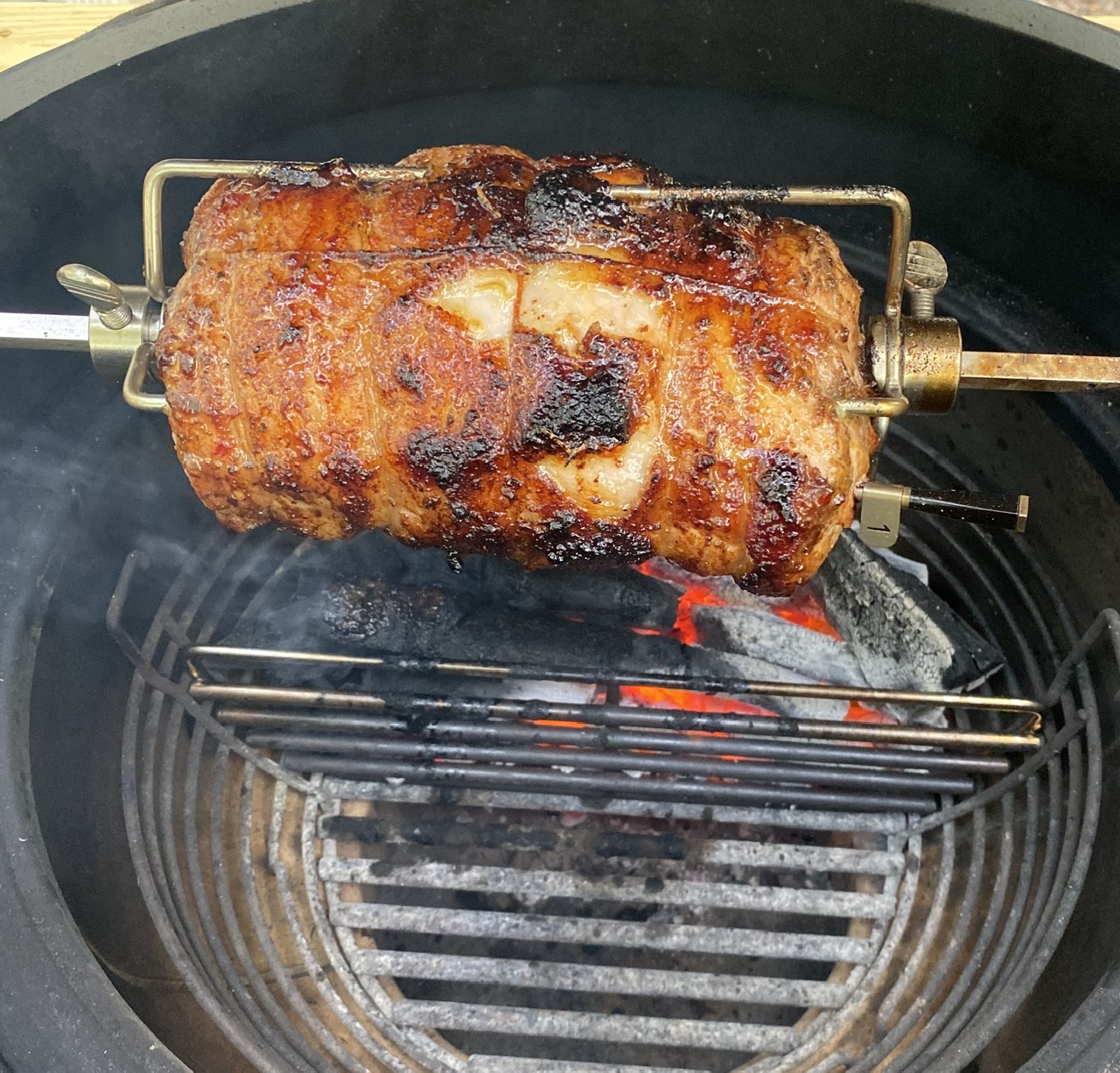
This cook involved three rounds of marinade/rub/glaze and was started the night before. I read or watched somewhere that a decent, quick and easy overnight marinade for a pork rotisserie is “Italian Dressing”….the kind that comes in a bottle and goes on salads. We didn’t have any in, but I thought it an intriguing enough idea, so improvised.
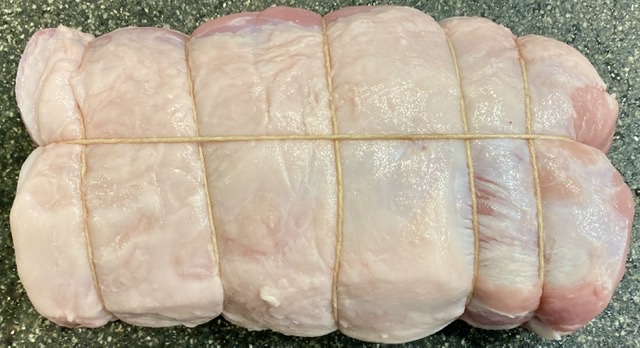
Before all that, the pork needed to be trussed. Essential for a rotating chunk of meat as it keeps things all together and uniform. Trussing turkeys and chickens is a real test of physics – a pork loin less so. String, knots, done. Looked like a professional butchery job.
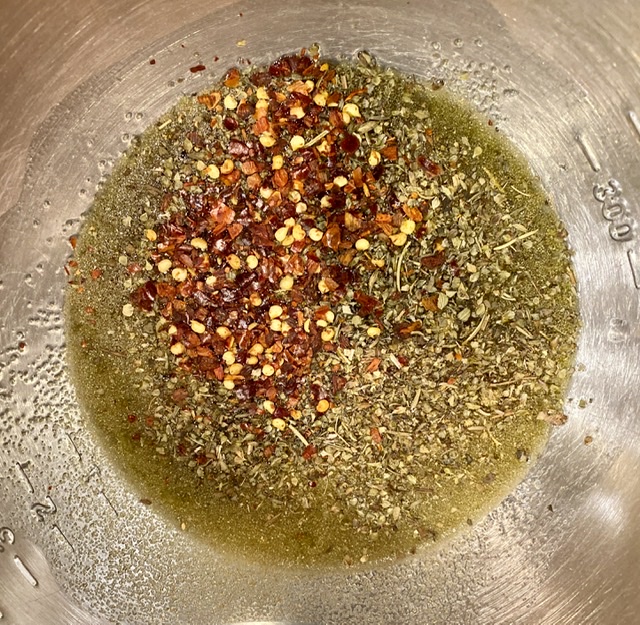
Next step was to make the Italian “condimento falso” (or “fake dressing” – see how anything translated to Italian sounds so cool !). Essentially :
- 1/2c Olive oil
- 1/4c White wine vinegar
- 1 tbsp Italian seasoning (I know…that’s cheating !)
- 1 tsp Garlic powder
- “Some” red pepper flakes
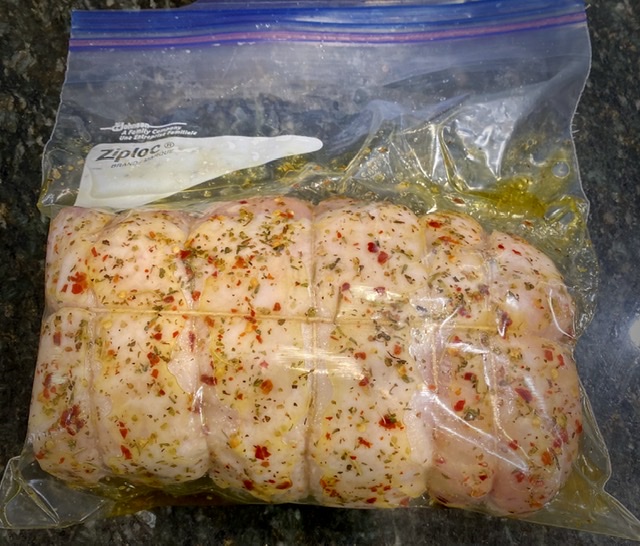
Now those amounts are, at best, a starting point. If you’re having a go, look for the right consistency and have a taste to see if you’d be happy putting the end result on a salad. If it’s close enough, use it. If you need more, just put in what you think. When you’re happy then put the loin in a large enough zip-loc bag and pour in the Marinata Italiano. Leave it overnight if possible. That’s what I did.
So the next day, you have a decent joint of meat that if you do nothing else with it, will still taste delicious. But I had two more layers yet to go.
Layer 2 was very straightforward – a pork rub, and I tried to put some thought into the pairing of the rub I used with the Italian marinade. I have a lot of rubs – a lot of them smoky, sweet, hot etc which would have overpowered the other layers. In the end I used a “Pork Mojo” rub from Atlantic Grill Co., my favourite online BBQ store in the USA. It’s a good all-rounder for pork dishes. Be liberal with this…
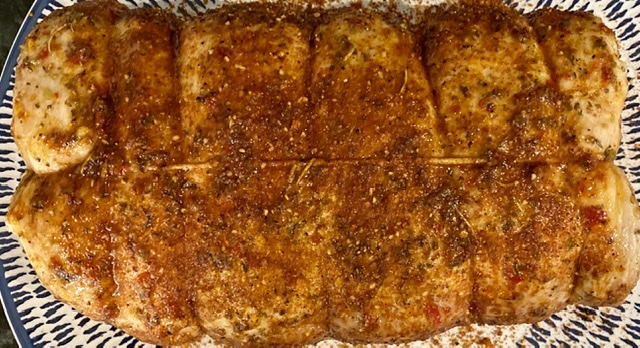
While the pork took on some of that rub, I got started on the glaze. This turned out to be real trial and error. Great fun. The starting point here was a jar of cherry jam that had been bought for this sort of purpose. Of course, I could have got to “cherry jam” stage with the right combination of something like cherries, sugar and probably some pectin-rich ingredient like lemons. But we had it, and so I used it. I read that bourbon makes sense here too, and I felt I also wanted a “pepper punch” and so the ingredients came together…

The Usual Suspects Coming together – overdid the vinegar Yeah…looks OK
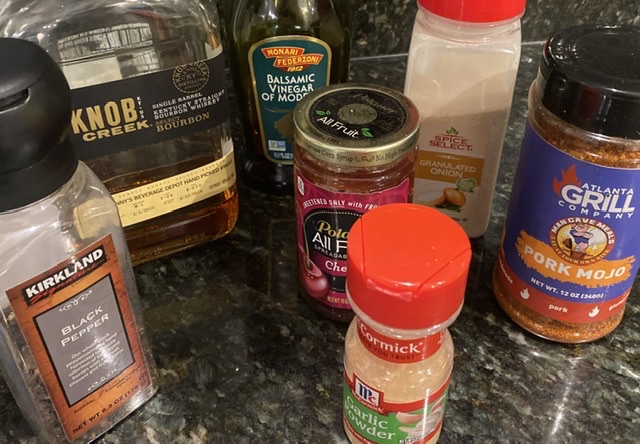
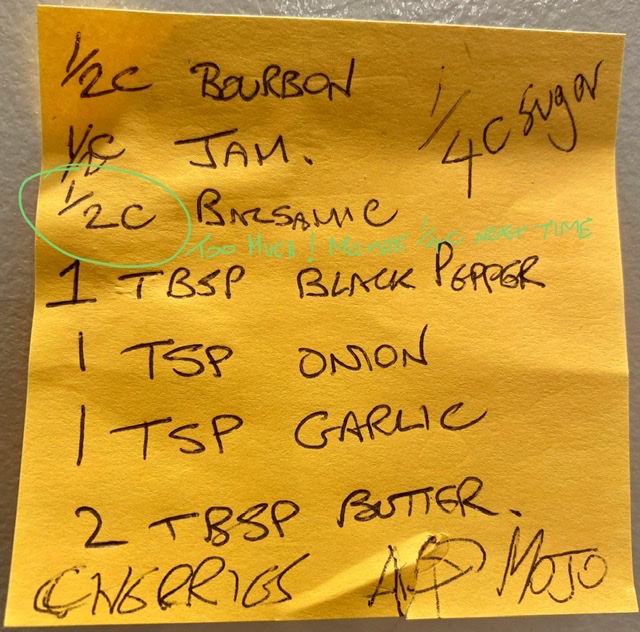
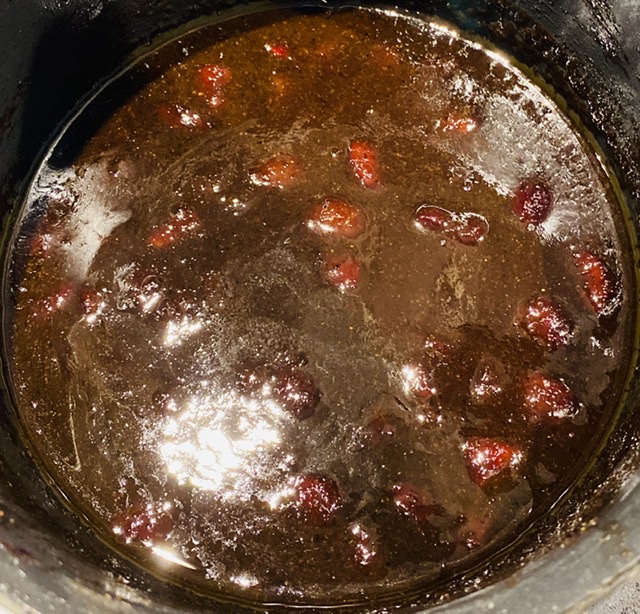
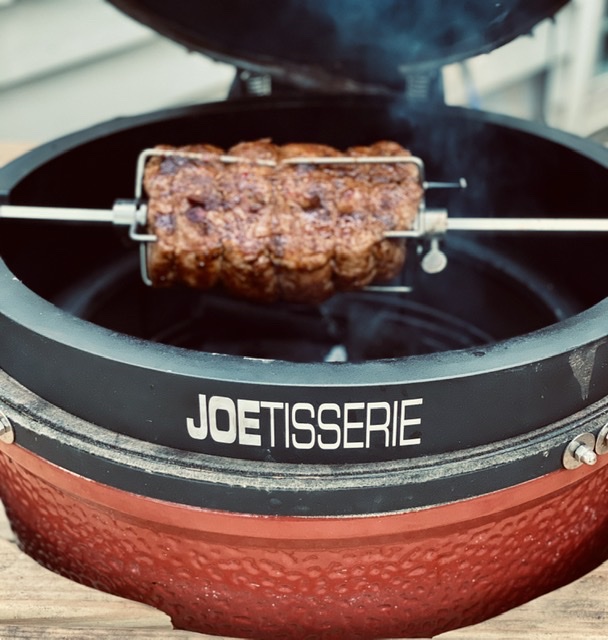
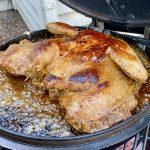
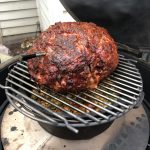
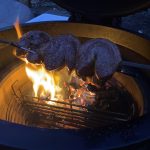
Usual method for jam making (with jam as an ingredient !). Jam, sugar, liquids in a pan. Dissolve the sugar and add the rest of the stuff to taste. I did discover that 1/2 cup of balsamic vinegar was a little too much. The jam was way too tart, so two things had to happen… (1) I convinced myself that this was only a glaze for the pork and so the tartness would add an interesting dimension; and (2) I added more sugar anyway ! So that reduced on the hob (fun interlude to burn off the alcohol in the pan with a lighter !), and the Kamado prep was started. This was going to be a Joetisserie cook on the Classic Kamado, with a MEATER+ temperature probe.
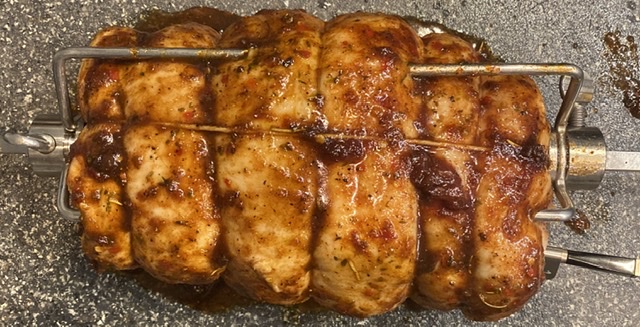

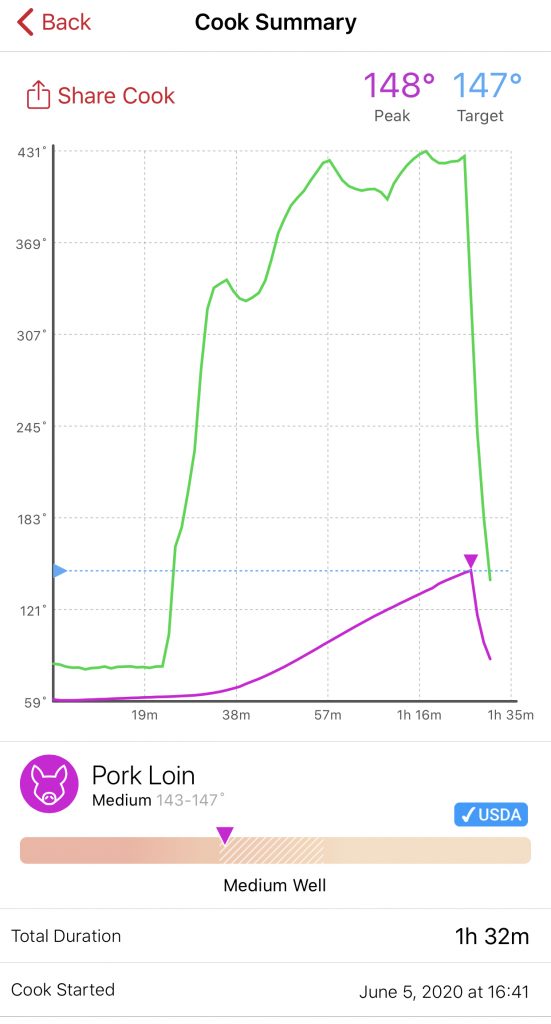
The KJ got to 350-400F. Actually a touch over that according to the food probe, with a target internal temperature for the meat of 147F – just within the USDA “safe zone”. Pork can be served a little pink, in fact, it’s much better that way – overcooked pork tastes like cardboard. You can see the dips on the green line on the graph (the KJ “pit” temperature) when the lid was opened, but this sort of cook is quite tolerant of the actual temperature – that purple “meat temperature” kept rising at a nice rate. The meat probe was in the meat for about 30 minutes before going into the Kamado, so total cook time was only around an hour, actually. Just enough time for a Moscow Mule or two !

I should just backtrack a little to the overly-tart “glaze” sauce which was about to get an extended lease of life. About half of it had been used for the “third stage glaze” on the pork, so there was some left which could probably be turned into a decent sauce with a little more patience and some imagination. It was returned to the heat with about a cup of “extra liquid” in the form of cranberry juice. The reduction yielded a sweeter sauce – this time worth taking a chance on as a condiment, for sure.
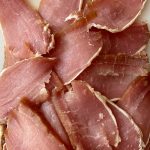
The hour up, and the MEATER probe having counted down, the meat came out and was thinly sliced. Simple “spuds” were boiled and tossed in butter, and we debated the merits of “Bisto” – Brits will know what I mean – and agreed to it’s inclusion (for the kids, you understand). End result was a hit…with the sauce a surprising “Best Supporting Actor”. The pork was juicy, not in the least bit dry, and delightfully pink in the middle.
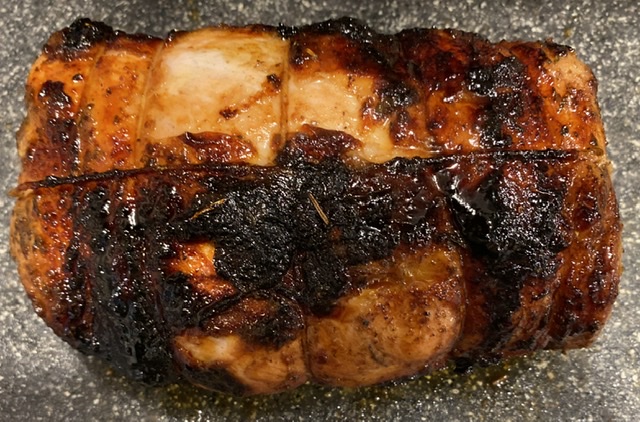
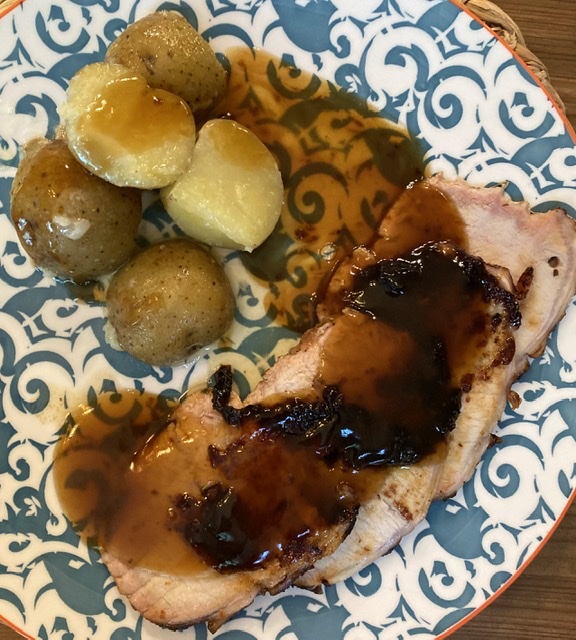
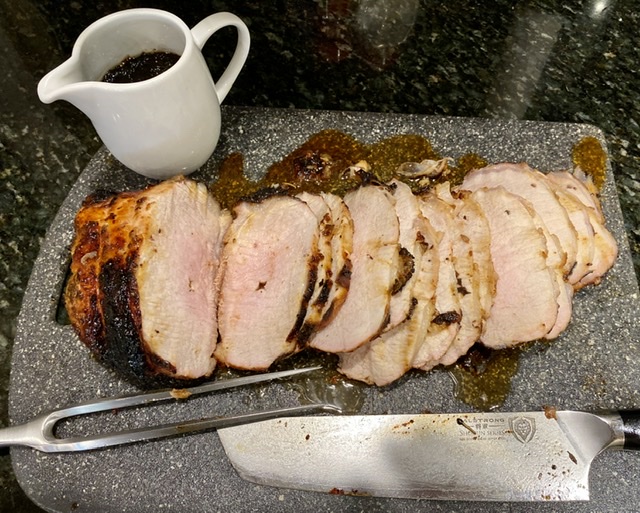
This one is a keeper, and so many other variants to those three marinade / rub / glaze layers. As long as Costco keeps selling those huge pork loins, then we continue to have a lot of options here…
0 comments on “Bourbon Cherry Glazed Pork”Add yours →